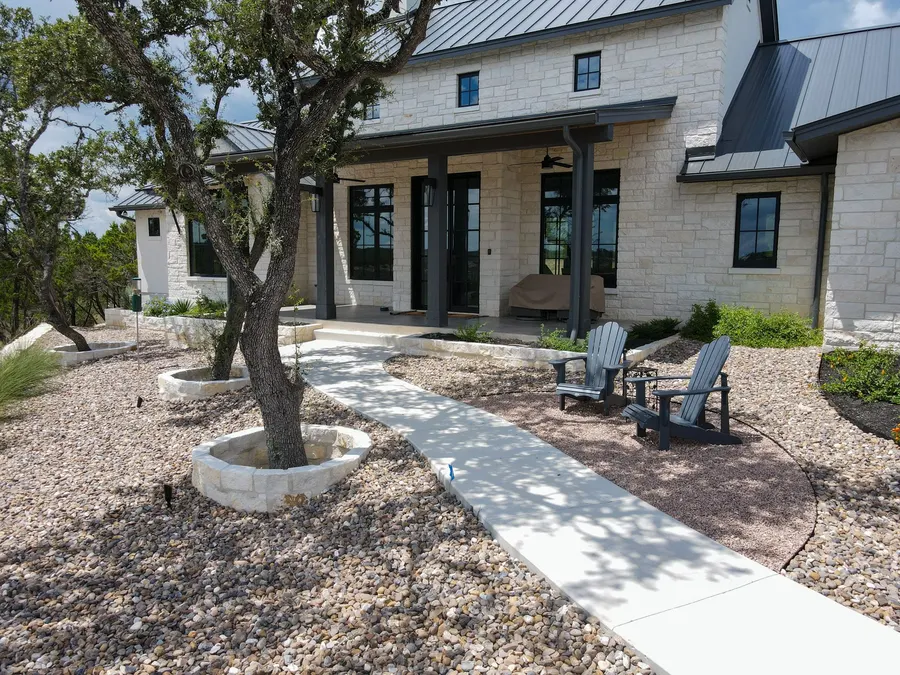
Not a gravel pit with three agaves in it. Planting that still looks planted in August, on a lot that stops fighting the climate.
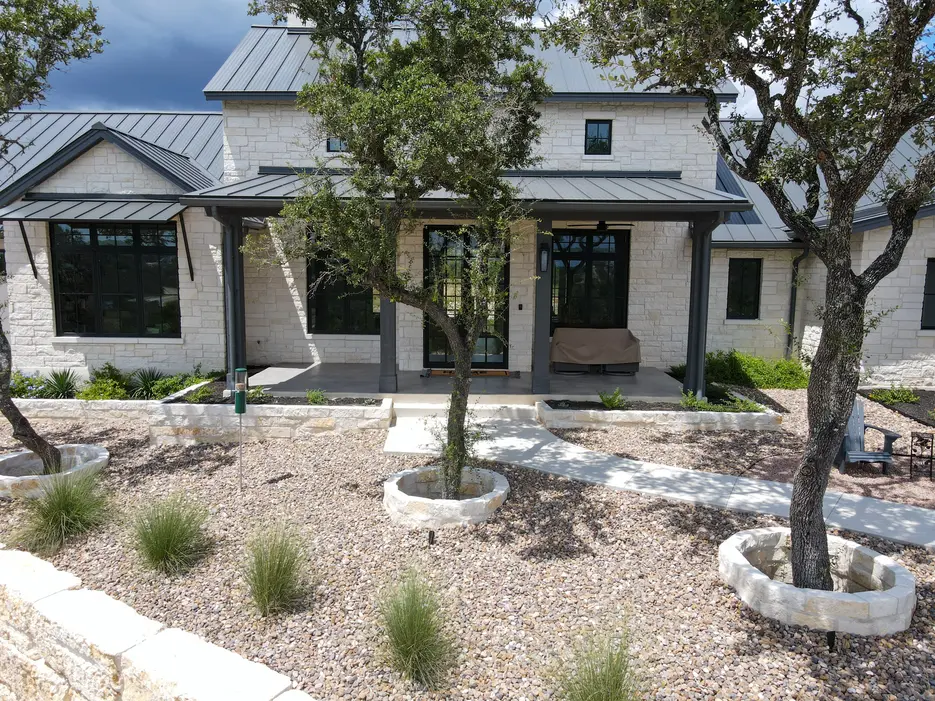
Xeriscaping gets a bad name because of what usually gets sold as xeriscaping: a lawn ripped out, gravel poured over the whole thing, and a few spiky plants dotted around. That is not low-water landscaping, it is an absence of landscaping.
Done properly it is a planting design like any other, using species that happen to want what this climate gives them. Texas sage, salvia, muhly grass, mountain laurel, rosemary, and lantana carry color and texture through the year and stop needing you once they are established.
The gravel and stone are structure, not filler. Where turf comes out, something has to hold the ground and move water, and that is a design decision rather than a default.
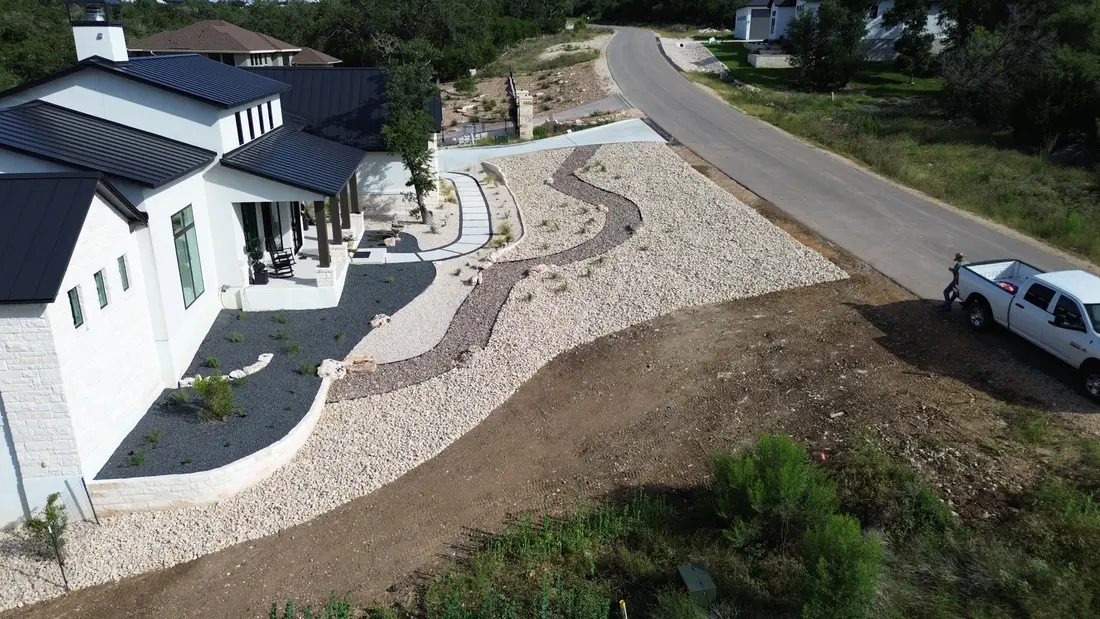
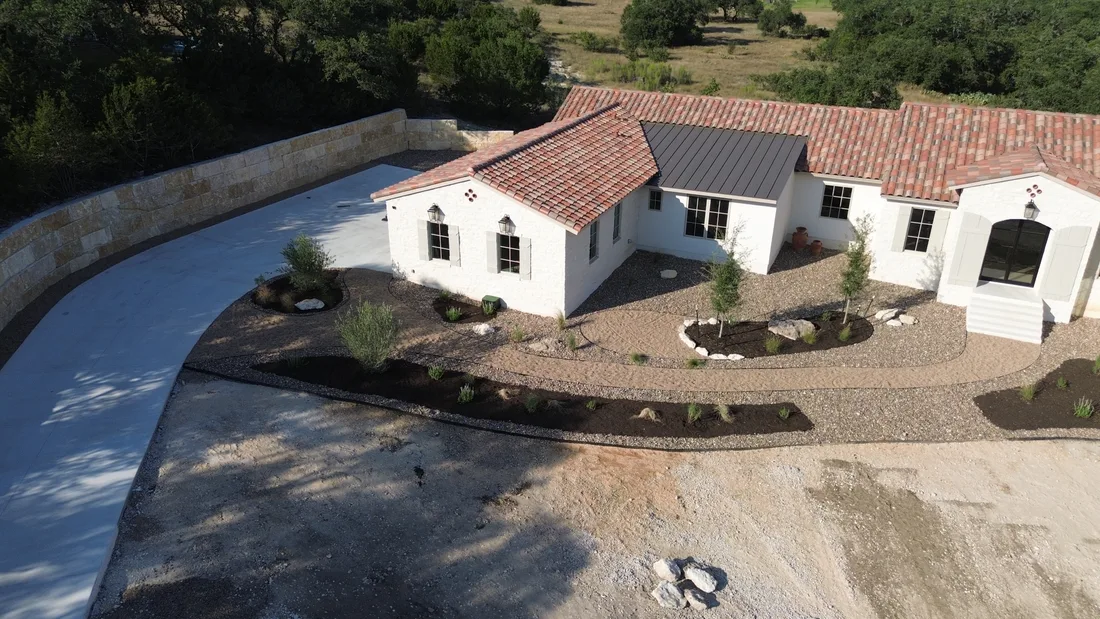
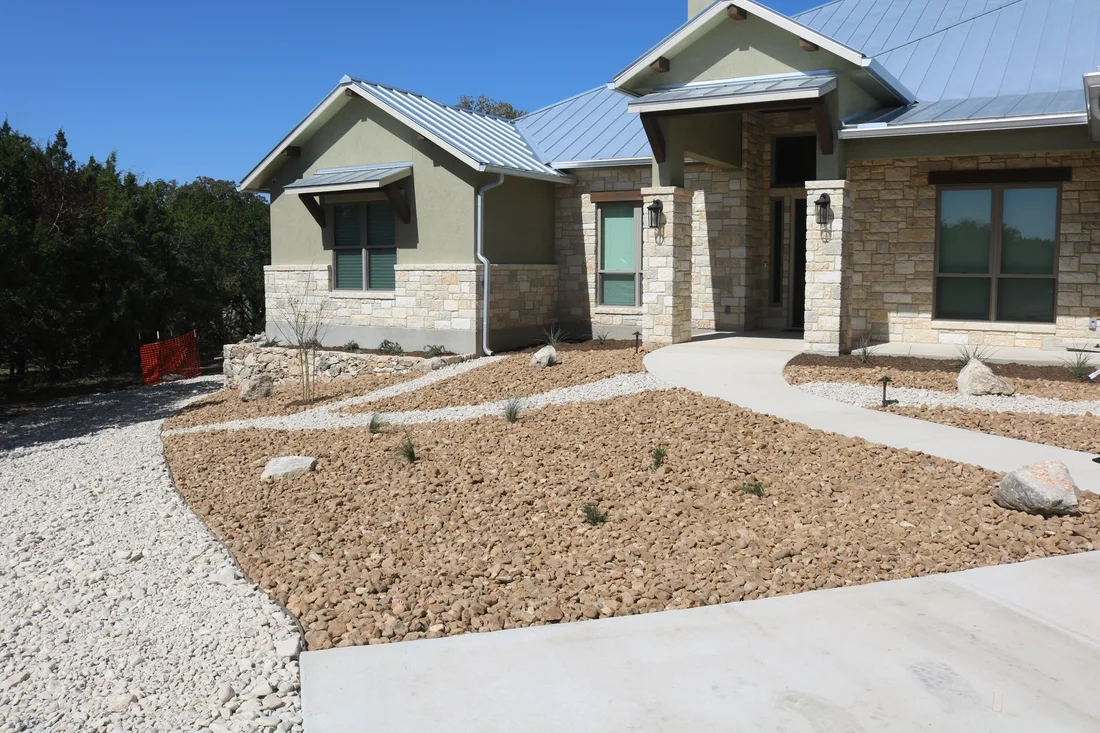
Three things push Hill Country yards toward native planting. The ground is a few inches of alkaline caliche over limestone, so plants that want deep rich soil never really settle. Water comes with drought-stage restrictions most years. And the deer will test anything new that goes in.
The useful part is that those three pressures point at the same plant list. Most of what survives the drought is also what the deer tend to leave alone, because tough, aromatic, silvery foliage is unappealing for the same reasons it is hardy.
Nothing is deer-proof when food gets scarce, and new planting of any kind needs protecting through its first season while it establishes. We plant this way across the area, Blanco and Boerne included.
Cory and Tyler of Singer Services did an amazing job landscaping our property. Their creativity of design to include hardscape, plant selection and placement were perfect, all while staying within our budget. Their team, led by Colton, were second to none. They cheerfully answered all our questions, even making recommendations to improve the esthetics of the project.
We have used Singer Services for a variety of services, including regular mowing, landscape modifications, top dressing, shrub and tree bed maintenance, and irrigation, and they have consistently exceeded our expectations. Their attention to detail, responsiveness, and genuine care for our property are the reasons we continue to hire Singer.
We met Tyler Singer when we first relocated to Texas. When we first met, we were not quite ready to proceed with the landscape project he had bid for us. Fast forward 18 months, we called again and he came out immediately, provided great recommendations and within a few weeks we were on the schedule. The crew showed up as planned, very professional and did a great job.
Above and beyond. Locally owned by longtime members of the community. Had them re-sod my back yard which is now thriving. Also, I unknowingly had a sprinkler head burst prior Singer crew beginning installation. Completely out of their scope of work, but they repaired it as a courtesy with one of the owners doing the hand digging.
A few of them. There are more on the reviews page.
See all reviews on GoogleWhere water runs, where the sun sits through the day, what the soil is doing, and which areas you actually walk on.
Turf stays where it earns its place and comes out where it never gets used. That decision drives most of the water saving.
Beds prepared properly, grading sorted, and gravel or stone put in as structure rather than as a blanket.
Native and adapted planting laid out for how it will look grown in, with drip where it helps them establish.
No. It means turf where you actually use it and something better suited everywhere else. Most of the yards we do this way keep a lawn, it is just smaller and in the part of the property people walk on.
Texas sage, salvias, rosemary, muhly grasses, mountain laurel, yucca, and lantana all do well in this area. Which of them suits your lot depends on sun, drainage, and how exposed it is.
That is the point of it. Native and adapted plants, efficient drip irrigation, and right-sized turf areas mean the landscape stays healthy under normal drought-stage restrictions.
Through the first season, yes, while the roots get established. After that they need far less, which is where the saving comes from.
Mostly, and the plant list above is chosen with that in mind. Nothing is truly deer-proof when food is scarce, and anything newly planted needs protecting while it establishes.
Deer can wreck a Hill Country yard fast. See the best deer-resistant plants and design tips that actually hold up in Texas heat and drought.
Which Texas native plants handle drought, a hard freeze, and deer? The ones that hold up to what the weather here throws at them.
Plans drawn for your lot, your soil, and your budget
02Patios, walkways, walls, fireplaces, planter beds
05New systems and repairs, licensed installers
08Grading and dry creeks that move water off the lot
06Path, tree, and feature lighting after dark
03Green year round, no mowing, safe for pets