Best Texas-Native Grasses for Residential Lawns in the Hill Country
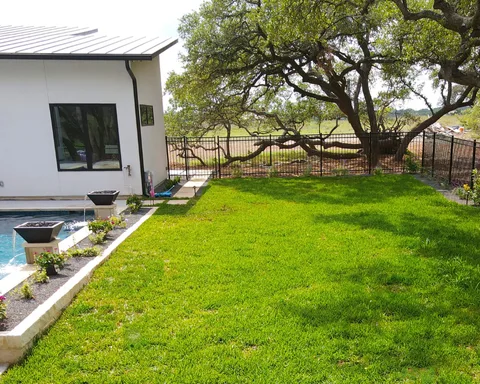
A Lawn That Can Survive Texas Weather
Many homeowners in the Texas Hill Country believe a thriving yard isn’t even possible. In areas like Spring Branch and Bulverde our weather makes planting the right kind of grass crucial. In our experience working with hundreds of Hill Country yards, we’ve noticed grass is one of the first things to struggle here, unless you choose a variety that’s naturally made for Texas. Native grasses handle our climate differently, giving you a lawn that looks good and stays resilient without constant fighting.
The Advantage of Choosing Texas-Native Grasses
Texas-native grasses are built for this region’s heat, rocky soil, and long dry spells. They establish quickly, need less water, and stay healthier year-round.
Popular options include:
Buffalo Grass: fine-bladed, sun-loving, and one of the lowest-maintenance turf choices in Texas.
- Sun Exposure: Full Sun
- Water Requirement: Low
- Maintenance Level: Low
- Cost per Sq. Ft.: $
Blue Grama: drought-hardy with a soft, natural texture that gives lawns a relaxed, native feel.
- Sun Exposure: Full Sun
- Water Requirement: Low
- Maintenance Level: Moderate
- Cost per Sq. Ft.: $
Curly Mesquite: strong performer in shallow or rocky soil, forming a full, green mat.
- Sun Exposure: Full Sun
- Water Requirement: Moderate
- Maintenance Level: Moderate
- Cost per Sq. Ft.: $$
Texas Sedge: thrives in partial shade and offers a neat, low-profile look.
- Sun Exposure: Partial Sun to Shade
- Water Requirement: Moderate
- Maintenance Level: High
- Cost per Sq. Ft.: $$$
Steps for Mixing Native Grasses
- Walk your yard and define sectionsIdentify which areas receive full sun, partial shade, or have shallow or rocky soil. Decide which grass belongs in each area before doing any soil work. Assign Buffalo Grass and Blue Grama to large, open areas with full sun. Use Curly Mesquite in rocky or thin-soil areas where other grasses struggle, and choose Texas Sedge for shaded edges, under trees, or north-facing areas.
- Remove existing grass and weeds Clear out current turf and weeds so new grasses can establish properly.
- Lightly loosen the soil Loosen the top few inches of soil if it is compacted. Deep tilling is not necessary for native grasses.
- Level and smooth the area Rake the soil smooth so seed, sod, or plugs have good contact with the ground.
- Install based on grass typeNative grasses can be installed using sod, seed, or plugs. Sod, which is pre-grown grass sold in rolls, provides instant coverage and is typically our recommended option when available because it establishes quickly and helps reduce weeds. Seed is a slower, more economical option best suited for large open areas. Plugs are small, rooted sections of grass used when sod is not available or when planting in smaller, shaded, or rocky areas. We typically recommend installing native grasses as sod when available, since it establishes faster, helps prevent weeds, and gives more immediate coverage.
- Sod: Lay rolls tightly together, press firmly, and water immediately.
- Seed: Spread evenly, lightly rake into the soil, and keep consistently moist during establishment.
- Plugs: Space evenly and water regularly until roots are established.
- Water during establishment All native grasses need regular watering at first. Once they are rooted and established, watering can be reduced significantly.
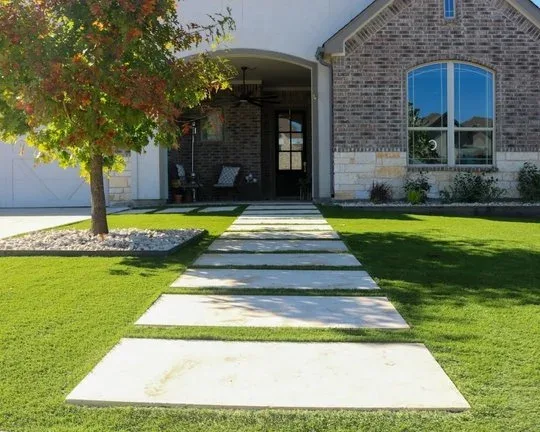
Smart Options for Low Water, Low-Maintenance Lawns
If planting, watering, and ongoing maintenance do not fit your lifestyle, many Hill Country residents look for low maintenance solutions. Two solutions stand out for a clean, durable yard that fits the Hill Country climate: artificial turf and xeriscaping.
- Artificial turf: stays green year-round, needs no irrigation, and works well in high-traffic or hard-to-grow areas.
- Xeriscaping: uses rock, gravel, and drought-tolerant plants to create a polished, water-wise landscape.
Both options are long-lasting and require minimal upkeep, keeping your yard looking great through every season.
Helping You Build a Lawn That Fits Your Home
Creating a lawn that works in the Hill Country can feel overwhelming, but you do not have to tackle it alone. Our team is here to guide you through every step, from choosing native grasses to exploring low maintenance options like turf or xeriscaping. We help homeowners understand what will grow well, what will last, and what will fit their lifestyle.
Want to work with someone who knows Native Texas grasses? Singer Services is proud to help homeowners across the Hill Country design, plant, and maintain the yard they have always wanted.